How to frame a poster: measurements, frame and mat
Everything you need to know about framing a poster: the 4 frame styles that cover 90% of cases, with or without glass, mats, standard vs. custom frames, and the cost of professional framing. With our practical recommendations based on the style of your home.

Key points
- 18 posters in the Living room posters collection, all in the table below.
- From 20,87 € in A4, up to 73,15 € in A0, 5 sizes for each poster.
- Printed in Europe on demand, free delivery from 59 €.
The table
The 20 posters at a glance




To frame a poster, start with 3 measurements: the paper, the inner space of the frame and the mat opening. You can then choose the finish and where to place the piece on the wall. Here are the points to check before buying a frame or asking for a quote.
1. Check the dimensions before the style
Note the print dimensions in the selector on the product page, then measure the print you receive before having a mat cut. For the frame, distinguish between the inner dimension, the visible opening and the outer dimension that will take up wall space. A frame listed as A3 does not describe these 3 measurements on its own.
If you already have a frame, open it according to its instructions and measure the space intended for the print. Also check its orientation and the placement of the fasteners. Don’t trim the poster to solve a mismatch without first examining the whole design, including any lettering near the edges.
Read the Brunelia size chart to compare the displayed centimeters with the frame you have in mind.

2. Choose the placement of the mat
The mat is a piece of board with a window cut out, placed around the image inside the frame. Its visible width and its thickness are 2 different measurements. The first changes the space around the artwork; the second alone doesn’t determine the decorative effect.
Before cutting, tell the framer the size of the paper and the area you want to keep visible. Lettering at the edge of the artwork can be hidden by an opening that’s too small. Compare the result with and without a margin by temporarily placing strips of paper around the design, without taping them to the print.

The poster for this part
Woman in polka dot dress choosing a song at the jukebox poster
from 20,87 €
3. Compare finishes without a set rule
Hold a sample of wood, black or metal next to the poster. Look at the result with the colors of the wall and the light in the room. A slim molding leaves more room for the subject; a wide molding becomes part of the composition. There is no mandatory width for each style.
For a pair, first try the same finish on both frames. You can then compare a variation in width or color. Note the outer dimensions: 2 identical prints can take up different amounts of space depending on their frames.

4. Prepare a mounting suited to the paper
Work on a clean, dry surface. Handle the print by its edges and follow the frame’s instructions. For a preservation-minded mounting, the US National Archives recommend suitable materials, a mat or spacers separating the paper from the glazing, and holding methods that avoid putting adhesive directly on the original. They also note that light can damage documents. These general recommendations do not certify the materials of any Brunelia product.
Read the National Archives preservation recommendations
For a print you care about particularly, ask the framer how it will be held in place and whether the mounting can be removed. Compare the glass or acrylic actually offered, its weight, the glare and the characteristics stated by the manufacturer. The name of the material alone isn’t enough to judge all its finishes.
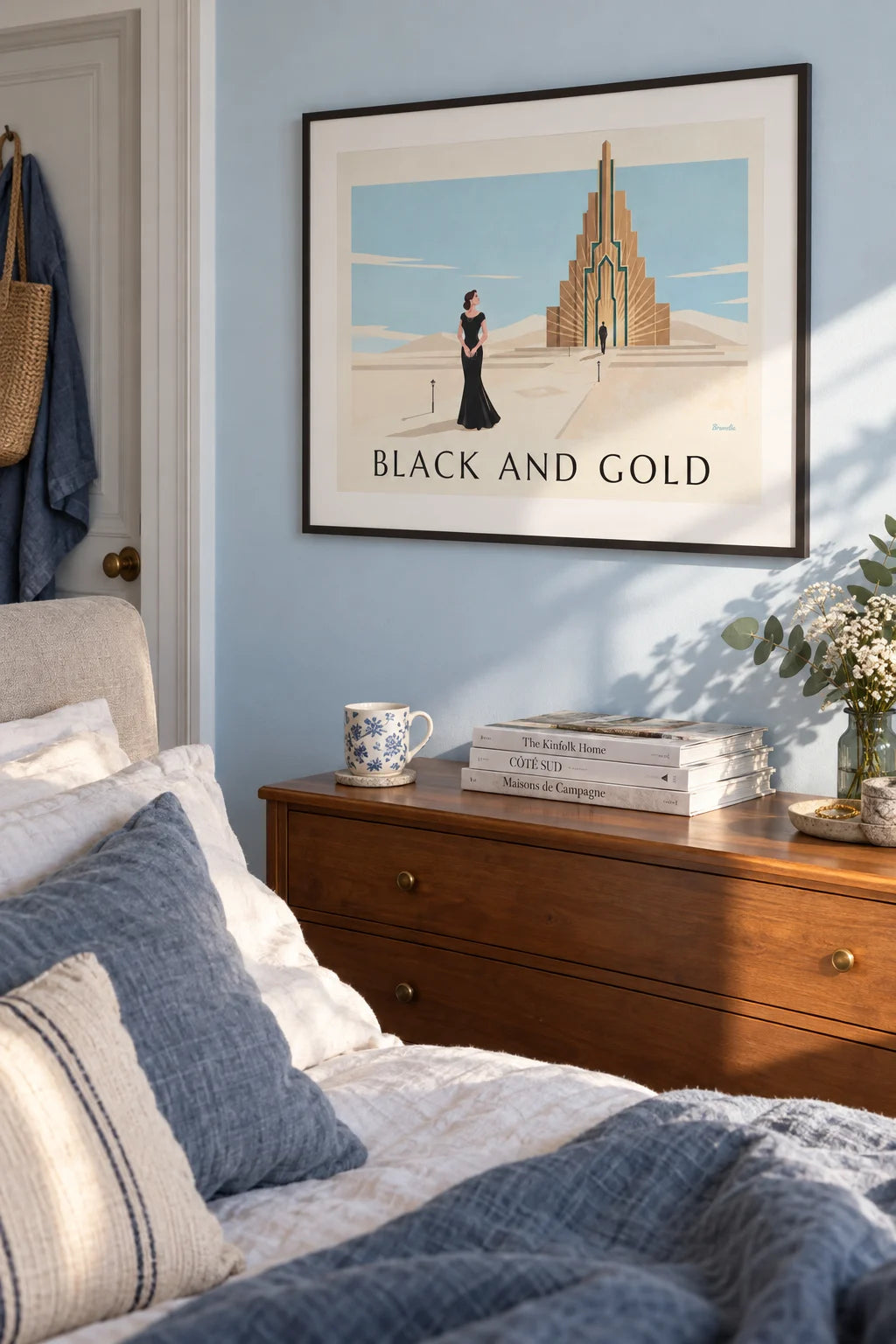
5. Choose between a ready-to-hang frame and a framer
A ready-to-hang frame may be fine if its measurements and holding system match the print. A framer can help when the dimensions, the mat window or the finish call for an adjustment. Ask for a quote that describes the frame, the glazing, the mounting and any cutting; the price of the print alone doesn’t set the frame budget.
Before installing, check the fasteners and the weight of the whole piece with its glazing. Choose a fixing that is compatible with that weight and the wall.
Read the guide to hanging without drilling to tell the methods and their limits apart.
Choose the location and size of the poster
Explore the posters then check the dimensions on each product page.

Build this wall
3 posters from this article, at true scale


All 3 posters: 104,42 €
Frequently asked questions
You often ask us
How do I know if my poster fits in a frame?
Compare the print dimensions with the inner space of the frame and, if there is one, the mat opening. Also check that the lettering stays visible.
What mat width should I choose?
Compare several margins around the design using strips of paper that aren’t taped to the print. The decorative width and the thickness of the board are 2 different measurements; no single width suits every poster.
Do I always need a custom frame?
No. A ready-to-hang frame may be fine if its dimensions and holding system match the print. A framer can help with a special cut or finish.
Is a frame included with a Brunelia poster?
Check the product description and the contents of the order. A frame shown in a styled photo doesn’t mean it is sold with the print.
Can you guarantee the colors will never change?
This guide does not offer a guarantee of unlimited preservation. Exposure, mounting and materials all affect preservation; avoid mistaking general advice for a certified feature of the product.
Keep exploring